
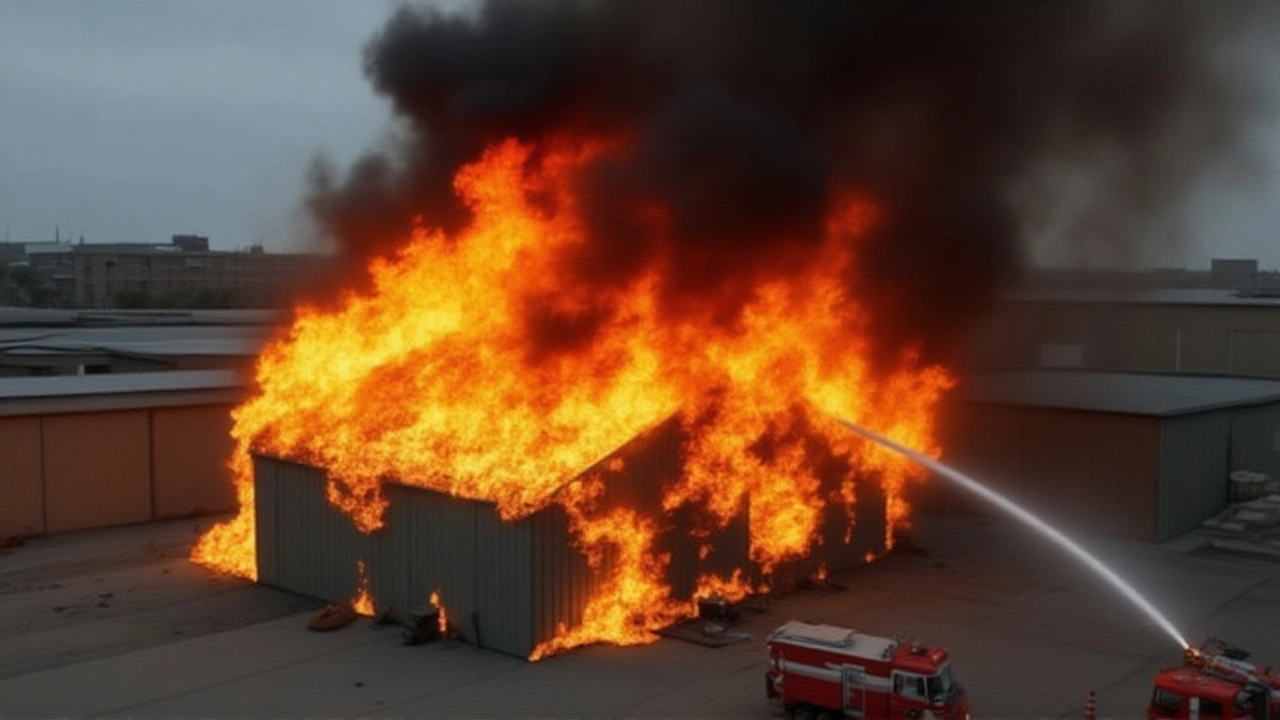
Just before 9 a.m. on Tuesday, November 25, 2025, a massive fire ripped through a two-story commercial building on Bridge Road in Southall, West London, sending thick plumes of smoke across the neighborhood and triggering a cascade of explosions that forced firefighters to pull back. By midday, three-quarters of the structure — housing both warehouse and retail space — was ablaze, and the London Fire Brigade had declared a major incident. The reason? Suspected storage of fireworks and pressurized cylinders inside the building. No one was killed. But the near-disaster left residents shaken, schools evacuated, and investigators scrambling to understand how such volatile materials ended up in a densely populated area.
What Happened on Bridge Road?
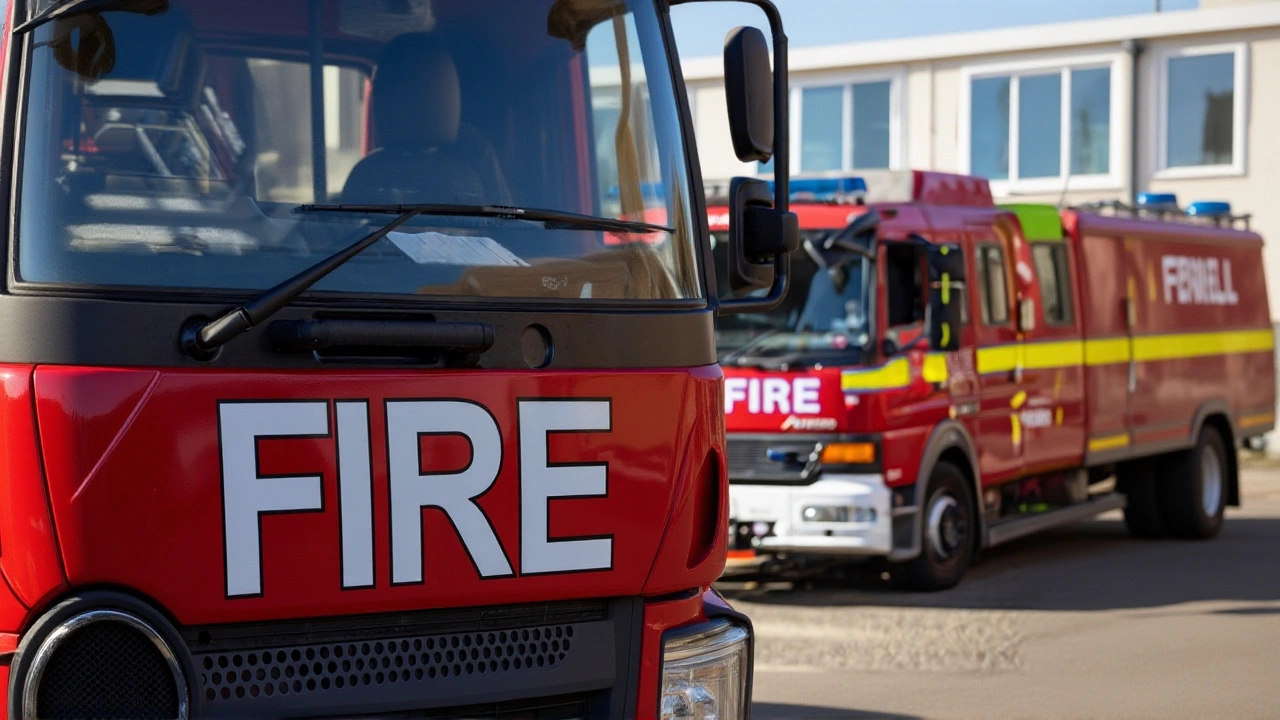
At 8:55 a.m., flames erupted from the ground floor of the building, quickly spreading upward. Within minutes, witnesses reported loud bangs — not just from the fire, but from things exploding inside. The London Fire Brigade dispatched 150 firefighters and 25 fire engines from stations in Southall, Heston, and Ealing. By 12:20 p.m., the situation had escalated beyond a typical warehouse fire. Assistant Commissioner Pat Goulbourne, the incident commander, confirmed that explosions were ongoing. "Crews were making progress," he told reporters, "until we heard multiple detonations. We had no choice but to withdraw everyone to a safe distance."
The evacuation order came swiftly: three local schools — including St. Mary’s Primary and Southall High School — and a residential block on nearby Willow Lane were cleared. Parents rushed to pick up children as smoke darkened the sky over West London. Residents were told to keep windows shut, seal door gaps, and avoid the area. Some reported the smell of chemicals — sharp, acrid — lingering in the air for hours.
Why Were Fireworks and Cylinders Stored There?
That’s the question nobody has a clear answer to — yet.
Commercial properties in Southall are often repurposed. Warehouses sit beside nail salons, curry houses, and electronics repair shops. The building on Bridge Road had been leased to multiple tenants, none of whom have been publicly named. But the presence of fireworks and gas cylinders — both tightly regulated under UK law — suggests either gross negligence or deliberate concealment.
Under the Explosives Regulations 2014, storing more than 5kg of fireworks in a non-licensed facility is illegal. Gas cylinders, especially propane or butane, require specific ventilation, fire suppression, and distance from ignition sources. Neither appears to have been in place.
"This wasn’t an accident waiting to happen," said Dr. Helen Mistry, a fire safety consultant with the Institution of Fire Engineers. "It was an accident that *should* have been prevented. If this was a storage facility for party supplies, why wasn’t it inspected? If it was a warehouse for industrial equipment, why were flammable gases mixed with pyrotechnics?"
Conflicting Reports and the Scale of the Response
There’s disagreement over how many responders were on scene. The Independent reported 150 firefighters and 25 engines. AOL.com, citing unnamed emergency sources, claimed only 100 firefighters and 15 engines responded. The discrepancy matters — not because of bureaucracy, but because it reflects how chaotic the early response was.
Firefighters had to contend with collapsing ceilings, flying debris, and secondary explosions well into the afternoon. One crew member, speaking anonymously to the BBC, described it as "like fighting a bomb site with water hoses." The heat was so intense that nearby cars melted. A delivery van parked 20 feet from the building was reduced to a charred shell.
No Injuries — But the Real Cost Is Still Unknown
By Wednesday, November 26, the fire was declared under control. Firefighters remained on site, dousing hotspots and ensuring no reignition. No injuries were reported. That’s a miracle, given the scale.
But the financial toll? Still uncounted. The building, estimated to be worth £3.2 million, is likely a total loss. At least five small businesses operated within it — a sporting goods store, a packaging supplier, a mobile phone repair shop, a textile wholesaler, and a storage unit firm. All are now out of business. Employees have been left without pay. Insurance claims will take months to process.
"We lost everything," said one former tenant, who asked not to be named. "I had 18 months’ inventory in there. My whole livelihood. And now I’m sitting in my sister’s spare room, wondering if I’ll ever get back on my feet."
What Comes Next?
The Metropolitan Police Service has joined the London Fire Brigade in a joint investigation. Forensic teams are sifting through rubble for evidence — chemical residues, shipping labels, CCTV footage from nearby shops.
Meanwhile, the London Borough of Ealing has launched a review of all commercial storage units in Southall. Over 80 such properties are registered. Inspections will begin within the week.
"We’re not just looking at this building," said Ealing Council’s head of planning, Mark Delaney. "We’re looking at the whole system that allowed this to happen. Was this a one-off? Or are there dozens of these ticking time bombs across West London?"
Why This Matters Beyond Southall
Southall isn’t an isolated case. In 2022, a similar fire in Barking destroyed a warehouse storing fireworks, injuring seven firefighters. In 2020, a warehouse in Wembley exploded during a routine inspection, sending shrapnel through three adjacent buildings. Each time, regulators promised tighter controls. Each time, enforcement lagged.
What makes this different is the scale — and the fact that it happened in broad daylight, in a residential zone, with children nearby. The fact that no one died is luck, not planning.
"We’ve been lucky so far," said Dr. Mistry. "But luck isn’t a policy. And when it runs out, the cost isn’t measured in pounds — it’s measured in lives."
Frequently Asked Questions
Why were fireworks and gas cylinders stored in a commercial building in a residential area?
UK law prohibits storing more than 5kg of fireworks without a licensed facility, and gas cylinders require strict ventilation and separation from ignition sources. The building on Bridge Road had no such permits or safety measures, suggesting either illegal storage or failed inspections. Authorities are now reviewing all 80+ commercial storage units in Southall to identify similar risks.
How did the fire get so out of control so quickly?
The combination of flammable retail stock, compressed gas cylinders, and fireworks created a volatile mix. Once ignited, the fire triggered chain-reaction explosions, which rapidly spread flames upward and outward. The building’s lack of firebreaks, sprinklers, or compartmentalization allowed the blaze to consume three-quarters of the structure within two hours.
Who is responsible for inspecting commercial storage facilities in Southall?
The London Borough of Ealing’s Environmental Health Department handles commercial inspections, but enforcement is often reactive, not proactive. Many small warehouses operate under the radar, especially in mixed-use zones like Bridge Road. The council now plans to conduct emergency audits of all such properties, prioritizing those with high-risk inventory like chemicals, fuels, or pyrotechnics.
What impact will this have on local businesses?
At least five small businesses lost their entire inventory and premises, with estimated losses exceeding £2.3 million. Many employees are now unemployed. Insurance claims are expected to take 6–12 months. Local leaders are urging the government to fast-track emergency grants for affected traders, as many have no savings to survive the disruption.
Are other areas in London at similar risk?
Yes. Similar warehouses storing hazardous materials have been flagged in Barking, Wembley, and Croydon. A 2023 audit by the London Fire Brigade identified 17 high-risk sites across the capital with inadequate storage practices. None have been shut down. This fire may finally force action — but only if public pressure forces officials to act before the next explosion.
Why wasn’t this building flagged during routine inspections?
Ealing Council admits inspections are often triggered by complaints, not risk profiling. Many warehouse tenants operate under false names or change occupancy frequently. Without digital tracking or cross-referencing with HMRC or business registry data, illegal storage can go undetected for years. The council now plans to integrate its records with national databases to improve detection.