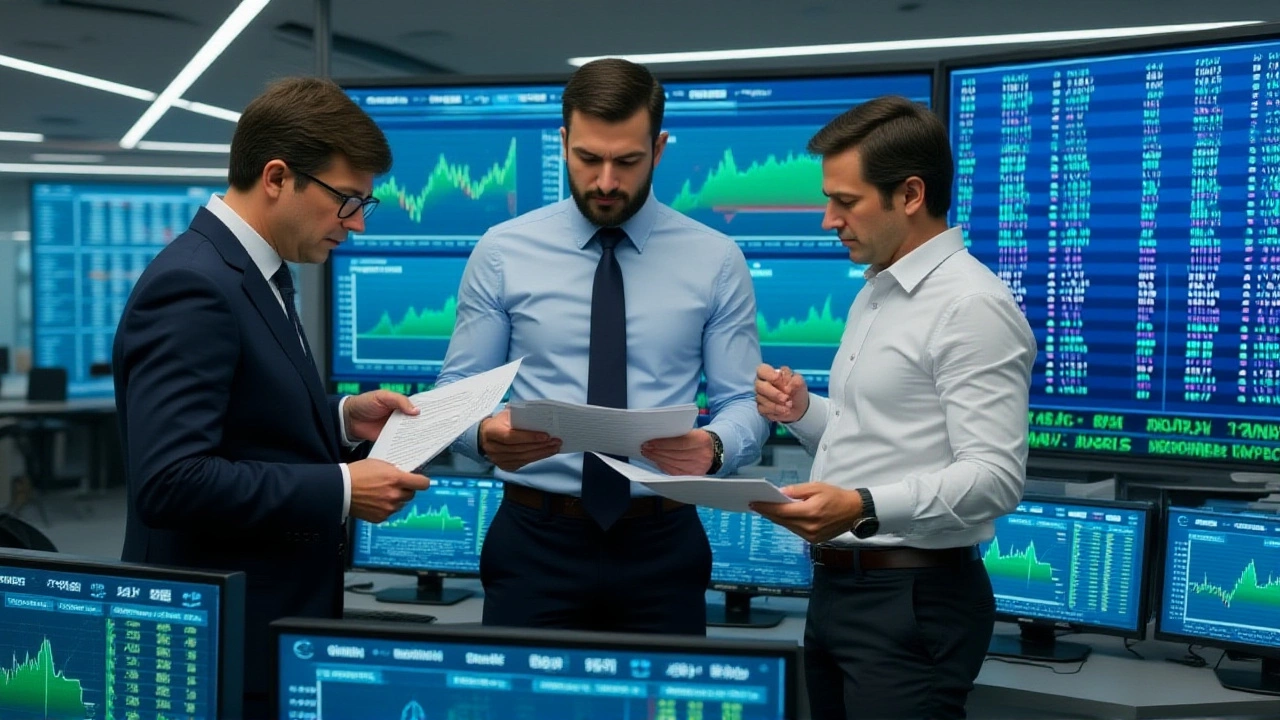
At 1:15 AM UTC on Friday, November 28, 2025, global financial markets froze—not from panic, not from a cyberattack, but from a broken air conditioner. The CME Group, the world’s largest derivatives marketplace, suffered a multi-hour trading outage triggered by a cooling system failure at its primary data center in the Chicago area. For hours, traders couldn’t execute orders in S&P 500 futures, U.S. Treasuries, or crude oil contracts. The markets weren’t just quiet—they were paralyzed. And the timing couldn’t have been worse.
When the Chillers Failed
It started with a warning light. Then silence. Engineers at the CME’s data facility, located just outside downtown Chicago, realized their primary chillers had shut down. Without cooling, server temperatures spiked beyond safe thresholds, forcing automatic shutdowns across critical trading platforms. Bloomberg Television confirmed that teams scrambled to restart chillers and deploy temporary cooling units. By late morning Eastern Time, trading had resumed—but not before the outage had rippled across Asia, Europe, and North America.
What made this worse was the context. November 2025 had already been one of the most volatile months for equities in years. Mega-cap tech stocks had been hammered as investors reassessed the pace of AI-driven market disruption. Wall Street was bracing for a losing month—even though the previous session had ended in the green. Now, with trading halted just before the U.S. open, uncertainty piled on top of uncertainty. Markets didn’t just stall; they held their breath.
A Recurrence, Not a First
"It’s actually not the first time this has happened," Bloomberg noted, referencing a nearly identical outage in 2019. Back then, a cooling malfunction also took down U.S. Treasury futures trading for several hours. But that incident lasted less time. This one? Longer. Deeper. More disruptive.
The 2019 outage had sparked calls for infrastructure upgrades. Some firms increased redundancy. Others diversified trading routes. Yet here we are, six years later, with the same root cause: a single point of failure in a physical system that’s supposed to run 24/7. The CME Group, headquartered at 20 S Wacker Dr, Chicago, IL 60606, manages over $1 quadrillion in notional value annually. And yet, its most critical infrastructure still relies on mechanical chillers—old-school, physical, vulnerable to heat, dust, and human error.
Market Reaction and Investor Doubt
As soon as news broke, CME Group’s stock (CME) dipped nearly 1% in premarket trading. Not a crash. But a sharp, telling wince. Investors aren’t just worried about downtime—they’re worried about complacency. If a cooling system can shut down global derivatives markets, what else is fragile?
Analysts pointed to the broader irony: while crypto exchanges have faced outages from software bugs and DDoS attacks, the world’s most traditional financial infrastructure is being taken down by a hardware flaw that could’ve been prevented with better maintenance protocols. No hackers. No malware. Just overheating servers.
"It’s like your bank’s vault door jammed because the AC broke," said one former CME systems engineer, speaking anonymously. "You don’t expect it. But when you do, you realize how little margin for error there is."
Global Impact, Local Failure
The outage didn’t just affect U.S. traders. London-based hedge funds couldn’t hedge euro-dollar exposure. Tokyo arbitrageurs missed price signals on soybean and gold futures. Frankfurt-based banks couldn’t adjust their bond portfolios. The CME’s platform is the central nervous system for global derivatives pricing. When it goes dark, markets don’t just pause—they lose synchronization.
European and U.K. bond markets, trading on separate exchanges like Eurex and LCH, remained unaffected. That’s a silver lining—but also a warning. Why is one continent’s infrastructure more resilient than another’s? And why does the U.S. still rely on a single, high-risk data center for critical price discovery?
What Happens Next?
The CME Group has yet to issue a public statement. No executive has spoken. No timeline for a full audit has been announced. That silence speaks volumes. Meanwhile, the Commodity Futures Trading Commission (CFTC) is reportedly reviewing the incident. The SEC may weigh in, too. Regulators have been pushing for more resilience in core market infrastructure since the 2010 Flash Crash—but progress has been slow.
What’s clear: this isn’t just a technical glitch. It’s a systemic risk. Financial markets run on trust. Trust that prices are fair. Trust that orders will execute. Trust that the system won’t fail because a fan broke.
Traders are already asking: What if this happens during a major economic announcement? During a Fed rate decision? During a geopolitical crisis? The answer, right now, is terrifyingly unknown.
Background: The CME’s Critical Role
Founded in 1898, the Chicago Mercantile Exchange merged with the Chicago Board of Trade in 2007 to form CME Group. Today, it handles over 40% of all global futures trading. Its platforms underpin pricing for everything from corn to crypto futures. Its data centers are the beating heart of price discovery.
Yet, unlike cloud-native firms like Nasdaq or NYSE’s digital infrastructure, CME still runs a hybrid model—part legacy hardware, part modern software. The cooling system failure isn’t an anomaly. It’s a symptom. A sign that financial infrastructure is aging faster than its oversight.
There’s a reason the 2019 outage didn’t lead to sweeping change. Cost. Complexity. Resistance to disruption. But this time, the market noticed. And it’s not just traders who are watching. It’s regulators. It’s pension funds. It’s millions of retirees whose 401(k)s are tied to the very instruments that froze on Friday.
Frequently Asked Questions
How did the cooling system failure cause a global trading halt?
The CME’s data center relies on precise temperature control to keep thousands of servers running. When the primary chillers failed, server temperatures rose beyond safety thresholds, triggering automatic shutdowns to prevent hardware damage. Since the CME is the primary venue for pricing U.S. futures contracts, its downtime meant traders worldwide couldn’t execute or hedge positions, effectively freezing price discovery across bonds, equities, and commodities.
Why didn’t backup systems prevent this outage?
While CME has redundant power and network systems, its cooling infrastructure appears to lack full redundancy. Multiple sources indicate the backup chillers either weren’t activated in time or weren’t sufficient to handle the thermal load. This suggests a gap in risk assessment—not a total lack of backup, but a failure to plan for cascading physical failures.
What’s the difference between this outage and the 2019 one?
The 2019 outage was also caused by a cooling failure and halted U.S. Treasury futures, but lasted roughly half as long. This time, the system remained down for over four hours, affecting more asset classes and occurring during higher market volatility. The recurrence suggests that fixes from 2019 were either incomplete or poorly maintained.
Who’s affected by this kind of outage?
Everyone who uses derivatives: hedge funds, pension funds, commodity producers, airlines hedging fuel costs, even retail investors in ETFs tied to S&P 500 futures. When the CME stops, price signals vanish. That creates uncertainty that can trigger wider market swings—even after trading resumes.
Could this happen again, and how can it be prevented?
Yes—unless CME invests in fully redundant, geographically dispersed cooling systems and moves toward modular, cloud-style infrastructure. Experts recommend deploying liquid-cooled servers and real-time thermal monitoring with AI-driven alerts. The cost? Millions. The alternative? More blackouts during crises when markets can’t afford them.
Why hasn’t CME Group issued a public statement?
CME typically avoids public commentary during active incidents to prevent panic or misinformation. But the silence this time stands out, especially after a 2019 outage that led to regulatory scrutiny. Investors are interpreting the lack of communication as a sign of unpreparedness—or worse, institutional inertia.